

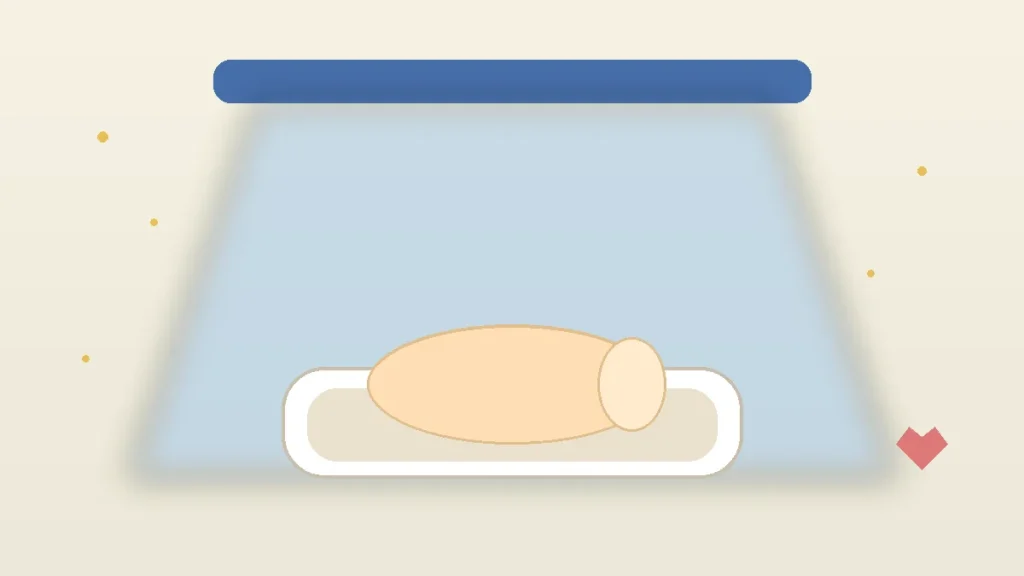
Newborn jaundice is the yellow colour that many babies develop in the skin and the whites of the eyes a few days after birth. In most babies it is mild, appears around the second or third day, and fades on its own within about two weeks as the baby’s liver matures. It is caused by a build-up of bilirubin, a yellow substance made when old red blood cells break down. A small number of babies have higher levels and need phototherapy (treatment under a special blue light), which is why every newborn should be checked, and why a baby who looks yellow in the first 24 hours, is very sleepy, or is not feeding should be seen quickly by a paediatrician. This guide explains what is normal, what is not, and when to bring your baby to the Paediatrics & Newborn Care department at Kamaal Nursing Home in Dhampur.
Why do newborn babies become yellow?
Before birth, a baby has extra red blood cells. After birth these are no longer needed and break down, releasing bilirubin. A newborn’s liver is still immature and cannot clear the bilirubin as fast as it is produced, so some of it collects in the skin and eyes and gives them a yellow tint. This is called physiological jaundice and is a normal part of adjusting to life outside the womb. According to the UK National Health Service, around 6 in every 10 babies develop some jaundice, and it is more common in babies born early (before 37 weeks) and in breastfed babies.
Less often, jaundice has another cause: a mismatch between the mother’s and baby’s blood groups, an infection, bruising from a difficult delivery, or a problem with the liver or bile ducts. These babies usually become yellow earlier, deeper, or stay yellow for longer, and need tests to find the reason.
How long does newborn jaundice last?
In a full-term baby, physiological jaundice usually starts on day two or three, peaks around day four or five, and clears by about two weeks of age. In premature babies it can take up to three weeks. Breastfed babies sometimes stay mildly yellow for longer; this is usually harmless as long as the baby is feeding well, gaining weight and passing normal yellow stools, but your doctor should confirm that.
Jaundice that lasts beyond two weeks (three weeks in a premature baby) is called prolonged jaundice. It is often still harmless, but a paediatrician should examine the baby and check the bilirubin level, because a small number of these babies have a liver or bile duct condition that is better found early.
How to check your baby at home
Look at your baby in good daylight, not under a yellow bulb. Gently press a fingertip on the baby’s nose or forehead for a second and release; if the skin looks yellow where you pressed, the baby has jaundice. The colour usually appears first on the face and then spreads downwards to the chest, tummy, arms and legs as the level rises. Yellow whites of the eyes, dark yellow urine (a newborn’s urine should be almost colourless) and pale, chalky stools are other signs to note.
Home checks are only a rough guide. The actual bilirubin level can be measured with a small blood test, which is available through the pathology lab at Kamaal Nursing Home, so the paediatrician can decide whether treatment is needed.
When to see a paediatrician straight away
Bring your baby to the hospital without waiting if you notice any of the following:
- Yellow colour appearing within the first 24 hours of life.
- Yellow colour spreading quickly to the arms, legs, palms or soles.
- The baby is very sleepy, hard to wake for feeds, or feeding poorly.
- The baby is floppy, cries in a high-pitched way, arches the back or has a fit.
- Pale or white stools, or dark yellow urine.
- Fever, or the baby feels cold to touch.
- Jaundice that is still present after two weeks.
Very high bilirubin levels that are not treated can, rarely, damage the brain (a condition called kernicterus). This is preventable with timely treatment, which is why these warning signs should never be ignored. The hospital’s emergency service is open 24 hours a day; call 01344-221786 or come directly to the Emergency & Ambulance department.
How is newborn jaundice treated?
Feeding
Bilirubin leaves the body in the stool, so frequent feeding helps. Most newborns need to feed at least 8 to 12 times in 24 hours. Breastfeeding on demand is encouraged; if the baby is too sleepy to feed, the nursing staff can show you how to wake and feed the baby.
Phototherapy
If the bilirubin level is above the safe limit for the baby’s age and weight, the baby is placed under a special blue-green light wearing only a nappy and eye protection. The light changes bilirubin in the skin into a form that the body can pass out easily. It is painless, and the baby is taken out for feeds and nappy changes. Treatment usually continues for a day or two until repeat blood tests show the level has fallen. Kamaal Nursing Home provides phototherapy for newborn jaundice and has a nursery with a radiant heat warmer for premature babies, so treatment can start in the same building where the baby was born.
Is sunlight a treatment for newborn jaundice?
Many families in Dhampur and Bijnor are advised by relatives to keep the baby in the sun. Sunlight does contain the wavelengths that break down bilirubin, but it is not a reliable treatment: the amount of useful light is small and unpredictable, a newborn’s skin burns easily, and the baby can become too hot or too cold. The NHS advises against treating jaundice by placing a baby in sunlight. A short time in indirect daylight near a window is harmless, but it should never replace a bilirubin test and, if needed, phototherapy under medical supervision.
Frequently asked questions
Can jaundice come back after phototherapy?
A small rise in the bilirubin level can occur after the light treatment stops. This is called rebound and is usually mild; the paediatrician may repeat the blood test after a day to make sure the level stays down.
Should I stop breastfeeding if my baby has jaundice?
No. In almost all cases breastfeeding should continue and, if anything, be done more often, because good feeding helps clear bilirubin. Only your doctor can advise a change in feeding, and this is rarely needed.
Does jaundice cause any long-term problems?
Common physiological jaundice that is monitored and treated when needed does not cause long-term harm. Problems arise only when very high levels are left untreated, which is why timely checks matter.
Newborn care at Kamaal Nursing Home, Dhampur
Kamaal Nursing Home has cared for the children of Dhampur since 1981. The paediatrics department is led by Dr. Kamaal Ahmad, Senior Paediatrician, and the hospital offers newborn resuscitation at delivery, a nursery with radiant heat warmer, phototherapy for jaundice, and immunisation, alongside the Critical Care & Maternity unit. If your newborn looks yellow or you are unsure, call 01344-221786 or visit the Contact page for directions.
Source: NHS, “Newborn jaundice” (nhs.uk).
This article is for general information; consult a doctor at Kamaal Nursing Home for advice about your condition.